
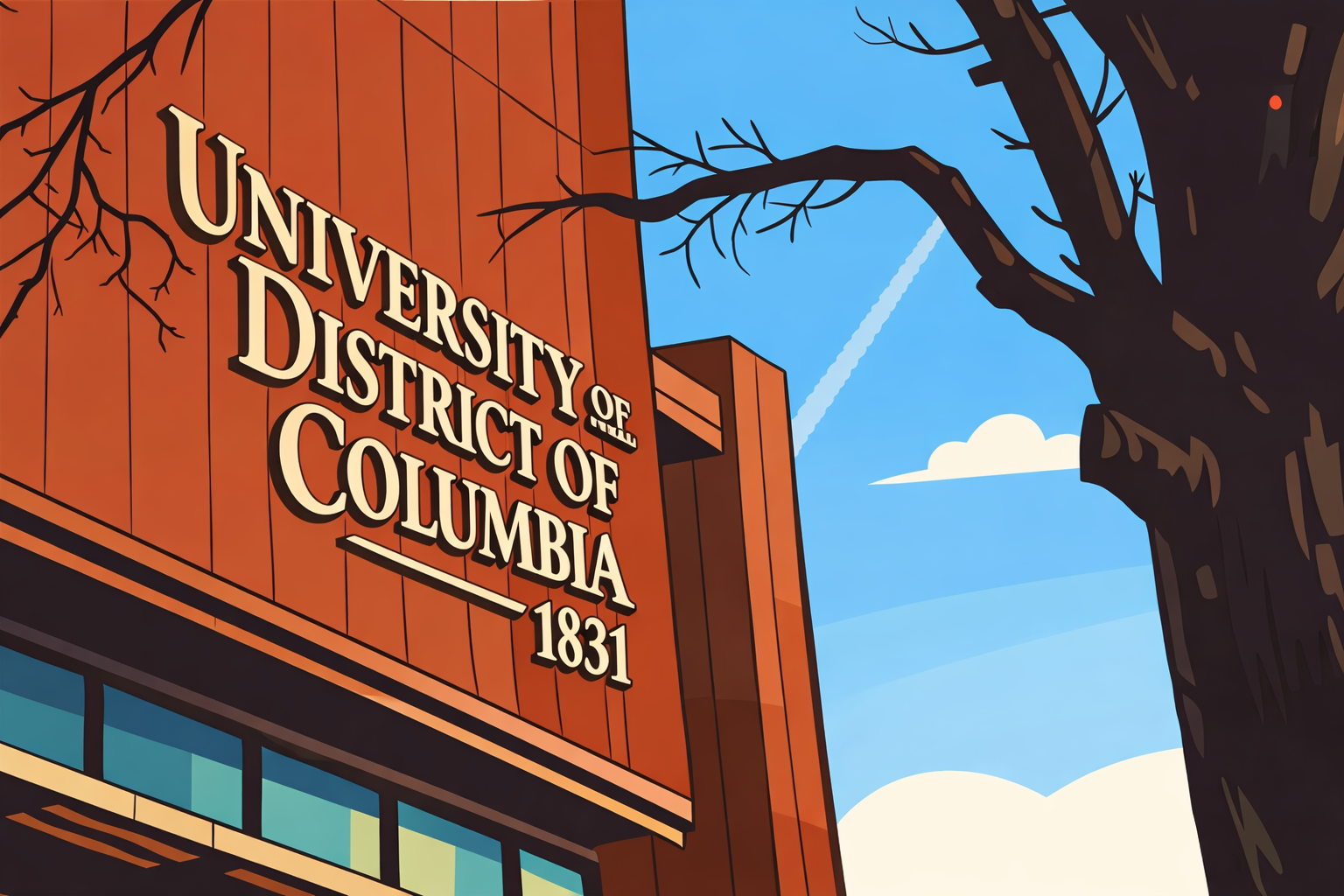
I arrived in the DMV in the late 1980s after graduating from Ohio State University. Marion Barry was still mayor, and I was excited to become part of the University of the District of Columbia.
Raised by my grandparents in Ohio, I spent summers visiting my mother in the Washington area, where I was introduced to the city’s culture, diversity and energy. My mother worked for the World Bank for more than 20 years, and through her I met people from Africa, the Philippines, Mexico, Ireland, Germany, St. Croix and many other places. At the University of the District of Columbia, I was immersed in a global community that expanded my understanding of culture, music and perspective, shaping both my academic growth and personal identity. During the summers, I listened to the “Quiet Storm,” admired D.C.’s signature geometric hairstyles and embraced a city known as both “The Mecca” and “Chocolate City.”
By 1990, UDC felt like a city within a city. Go-go music echoed across campus and throughout the District, while conversations about politics, music and art filled classrooms, hallways and neighborhood bookstores like Politics and Prose on Connecticut Avenue. Coming from the Midwest, I was equally inspired by D.C.’s international food scene and vibrant Black culture.
As a mass media major, I felt immersed in a generation filled with possibility. We were the children of parents whose own dreams had often been delayed by the Vietnam War and other social barriers. I wore Malcolm X T-shirts, attended sorority events featuring journalists like Frederica Whitfield and had opportunities to interview influential figures such as Maxine Waters and Marian Wright Edelman.
I quickly gravitated toward campus media and joined the staff of The Trilogy newspaper. My first assignment covered the stage play Sarafina! at the John F. Kennedy Center for the Performing Arts. During my undergraduate years, I completed internships with WUSA9 and NBC4 Washington. Years later, after graduation, I also interned with BET during the early 2000s.
Entertainment reporting became my entry point into journalism. I covered concerts, student theater productions with Arena Stage and art exhibitions while balancing work in banking, marriage and motherhood.
But the heartbeat of UDC was activism. In 1990, the campus erupted during the Kiamsha movement, a student-led protest demanding the administration address issues such as limited library hours that affected working students. I found myself at the intersection of reporting and participation.
The movement became a declaration that Black students in the nation’s capital would not be ignored. I interviewed organizers whose language echoed the teachings of Malcolm X and Angela Davis, documenting both frustrations and victories, including the administration’s decision to extend library hours and create a student advisory council.
As The Trilogy’s entertainment reporter, I often moved between multiple worlds. One evening I might review a sold-out play at Ford’s Theatre, while another night I interviewed musicians at Takoma Station Tavern. Armed with only a notebook, tape recorder and pen, I learned the importance of preserving stories and voices.
Today, I am currently completing my degree while also taking courses through the Extended Studies program. Returning to school has allowed me to update my skills in a rapidly evolving digital media landscape that has shifted journalism from manual newspaper layouts to AI-driven production tools.
While raising two children and maintaining a banking career that pulled me away from media, I never lost my passion for storytelling. Social media and AI are raising new ethical questions for journalists and media professionals, and I am motivated to help navigate this new era responsibly as part of UDC’s Digital Media program, which did not exist when I first attended the university.
There were challenges throughout my time as a student journalist. Editorial independence was often a struggle, particularly when administrators pushed back against critical reporting. I learned to stand my ground, verify my facts and protect the integrity of the student press while also recognizing my role as both participant and observer within the stories I covered.
Covering campus news in 1989 also meant engaging with the broader political climate of Washington. My introduction to Black politics began long before UDC through my grandfather, a pastor in Ohio with ties to the Progressive National Baptist Convention. Through him, I met figures such as Julian Bond, Jesse Jackson, Vernon Jordan and Sherrod Brown.
UDC gave me more than a degree; it gave me purpose. Balancing school, work and family transformed my quality of life and continues to shape this chapter of my journey. No matter my age or experience, I still believe dreams do not stop — they simply evolve.
“The Making of a Trilogy Reporter” by Angela Thomas was first published in 1989 and is republished with permission.